Prepare for repeated handling
Furniture and fragile items receive the protection included in your moving plan before transportation and placement.

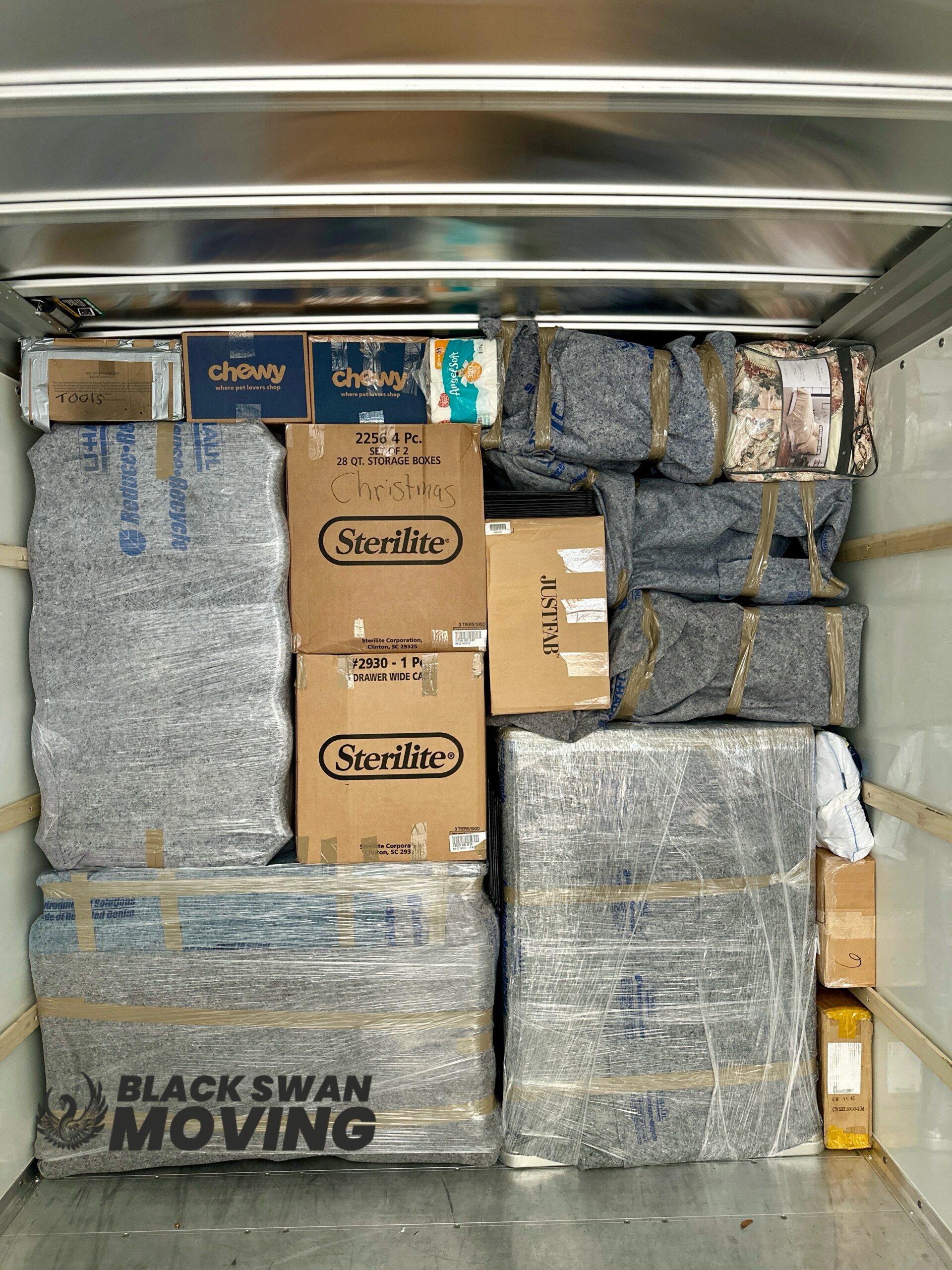
Storage moving support
When pickup and final delivery do not happen on the same day, Black Swan Moving helps plan the protection, transportation, storage placement, and next move.
 A real Black Swan Moving job: furniture protected before transportation and storage handling.
More than dropping off boxes
Items entering storage may be handled during pickup, placement, retrieval, and final delivery. Thoughtful preparation matters because the job does not end when the storage door closes.
Furniture and fragile items receive the protection included in your moving plan before transportation and placement.
Discuss which belongings may need earlier access and which can remain farther inside the space.
Label boxes clearly and keep an inventory so retrieval and final delivery are easier to organize.
When storage can help
Availability, duration, facility, access, inventory, and final-delivery plans must be confirmed for each move.
Temporary storage can help when you must leave one property before the next is ready.
Move furniture and boxes out of active work areas, then arrange delivery when the space is ready.
Create time to sort belongings and make placement decisions without crowding the new home.
Coordinate approved office furniture, equipment, or inventory during a phased commercial move.
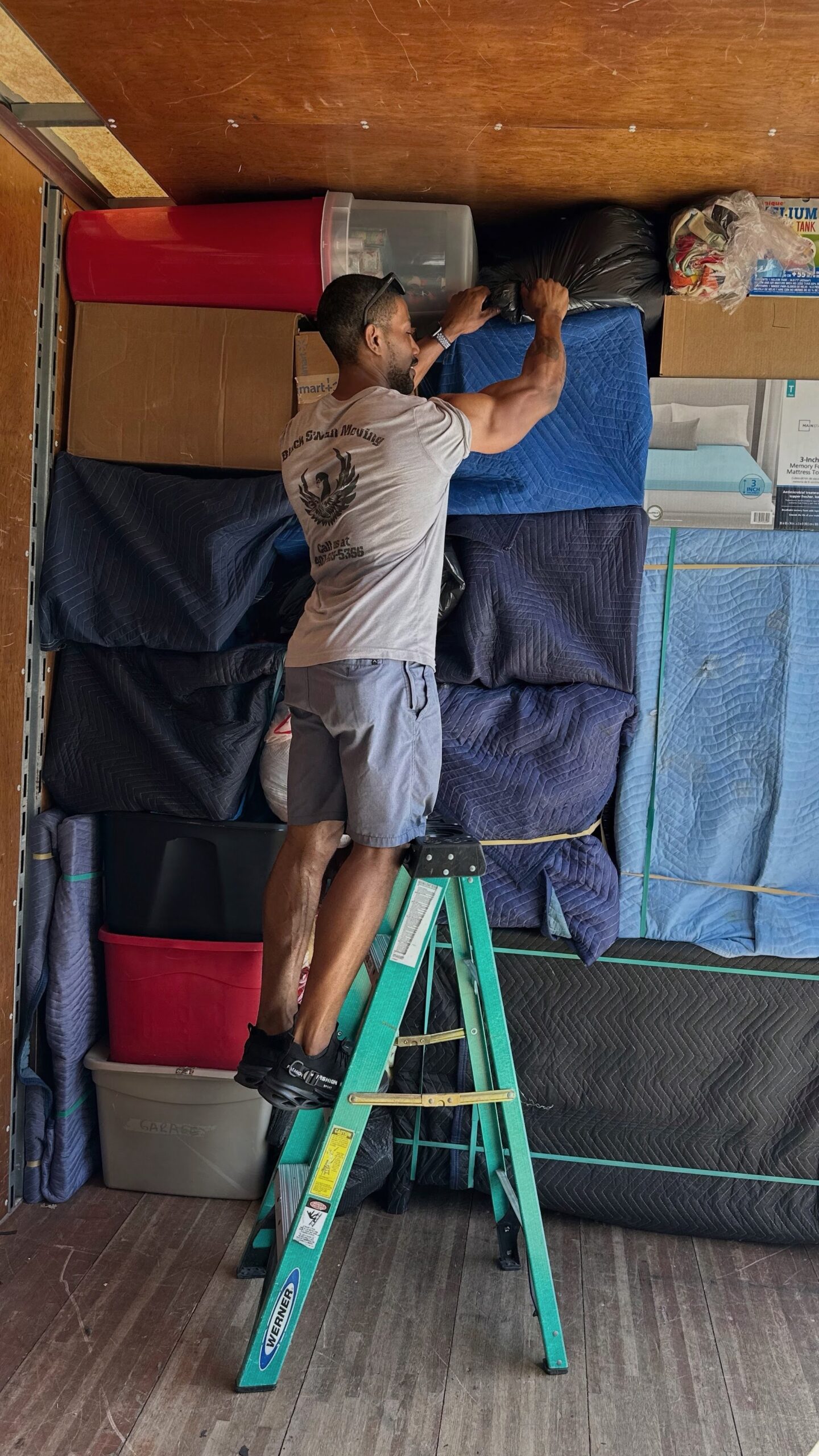
One coordinated plan
The exact services depend on your written estimate and storage arrangement. A plan may include:
Share what is moving, where it is going, unit size, floor, elevator, gate code, and walking distance.
Prepare approved furniture and fragile pieces, then load the truck in an organized sequence.
Move belongings to the confirmed facility and place them according to the available space and agreed plan.
When you are ready, schedule the next move based on availability, access, destination, and current inventory.
Know what you are choosing
Storage features vary. Ask about the details that matter for your belongings instead of assuming every arrangement includes the same access or conditions.
Confirm the facility address, unit size, floor, door dimensions, elevator, truck access, and who holds the rental agreement.
Ask when and how belongings can be accessed, whether appointments are required, and who is authorized to enter.
Confirm whether climate control is included, which conditions are controlled, and whether the facility is appropriate for sensitive belongings.
Ask the facility to explain locks, gates, cameras, alarms, staffing, and access records. Features differ by location.
Review coverage, exclusions, valuation, claims procedures, and whether separate storage insurance is required.
Confirm minimum terms, recurring charges, access fees, transportation charges, final-delivery costs, and notice requirements.
Black Swan Moving does not promise climate control, unrestricted access, inventory management, or particular security features unless they are included in your written estimate or storage agreement. Ask our office which services apply to your move.
Protect the space and everyone around it
Tell us what you intend to store. The facility and moving agreement determine what is prohibited, and additional restrictions may apply.
Support around the storage move
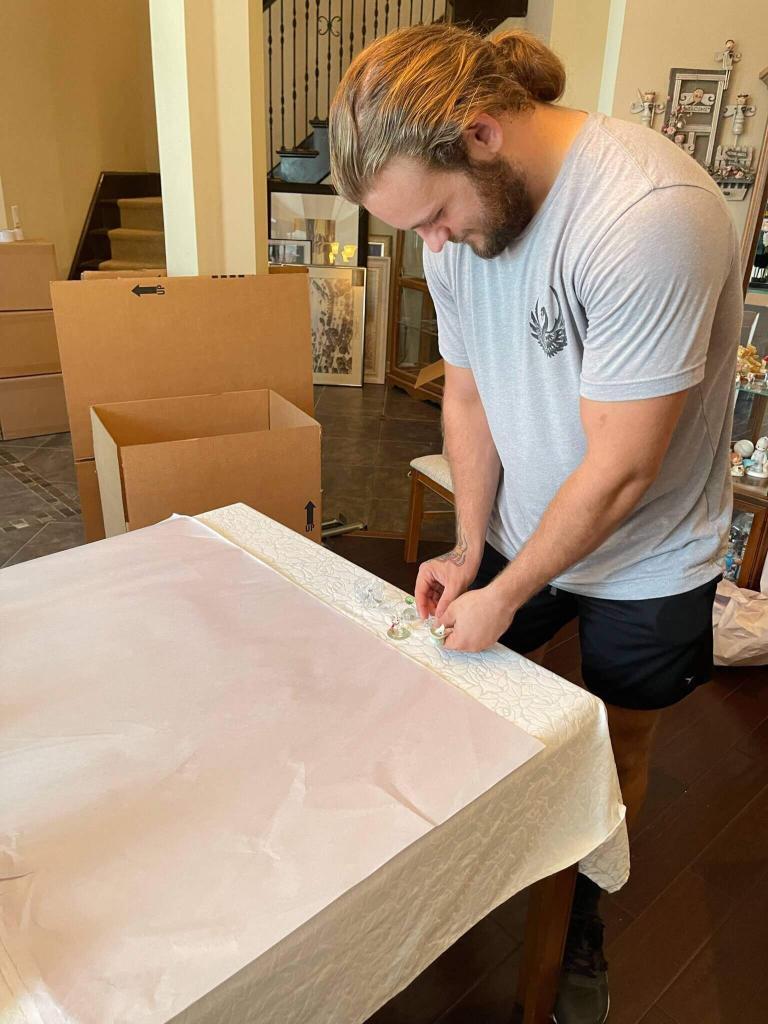
Full packing, partial packing, labeling, fragile-item preparation, and unpacking support.
Explore packing services →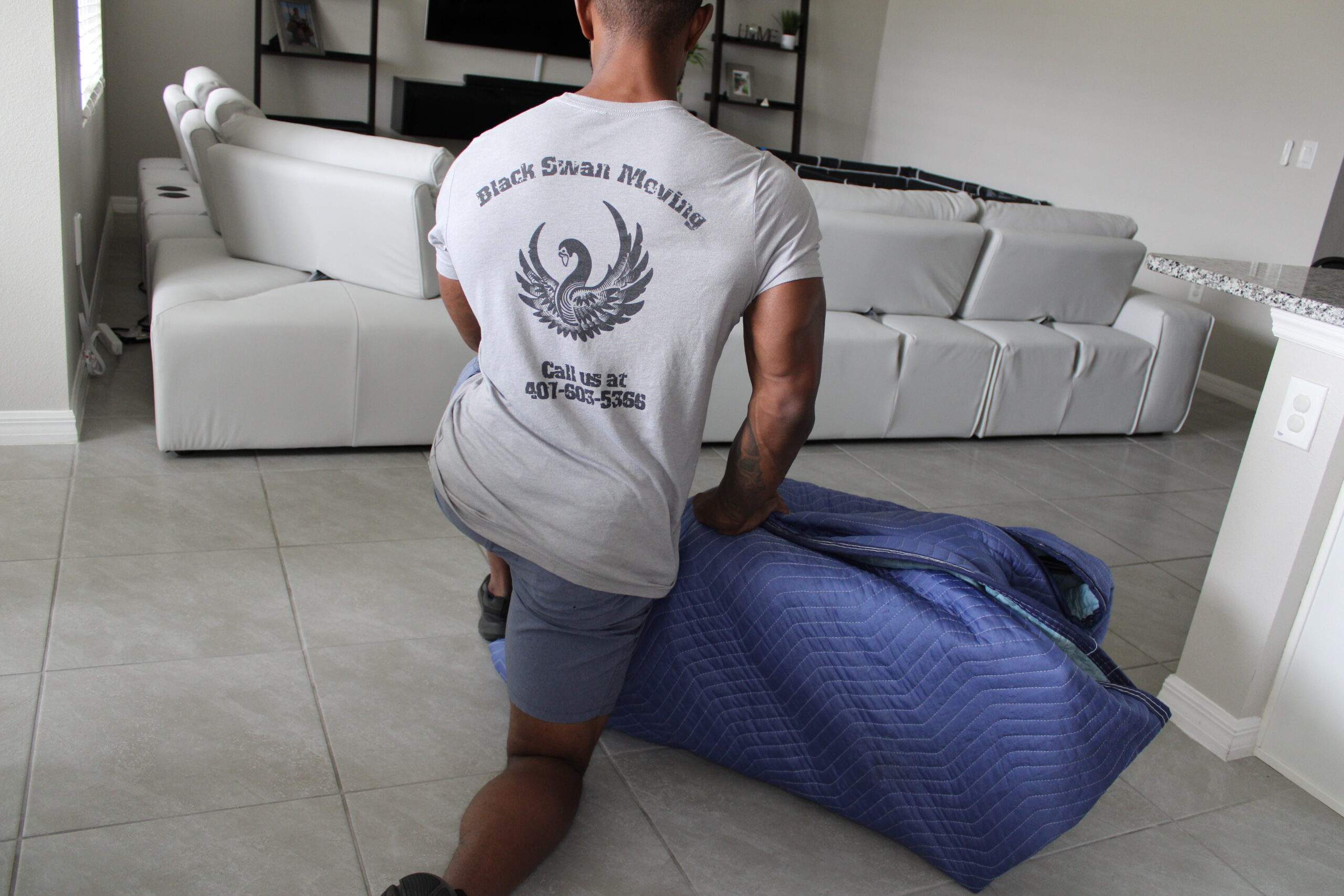
Moving support for houses, apartments, condominiums, townhomes, and transitions involving storage.
Explore residential moving →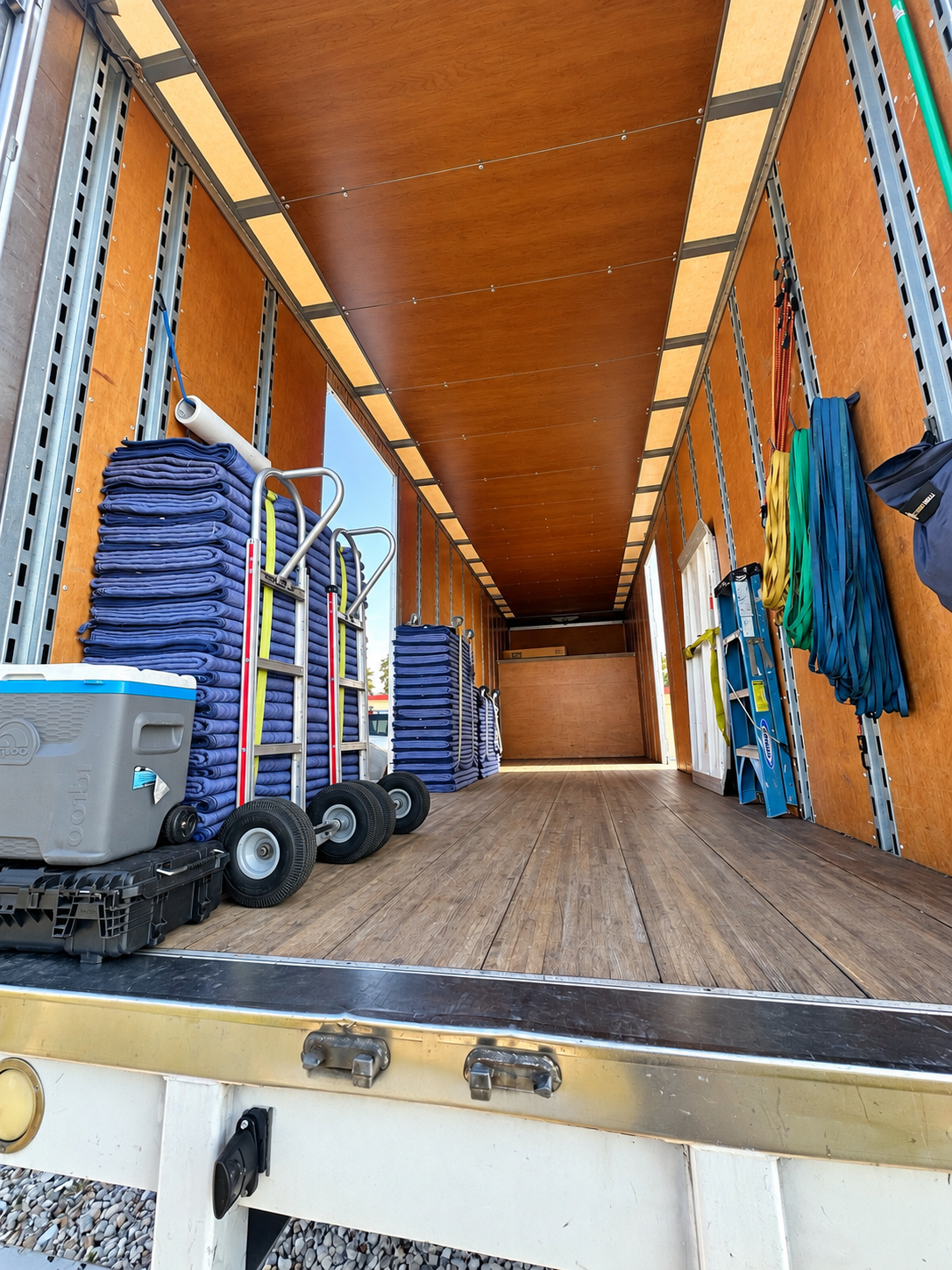
Organize packing, access, essentials, communication, and the final walkthrough before moving day.
Open the moving checklist →Two parts of Florida law matter most when a move includes storage: the moving law (Chapter 507) and the self-storage law (Chapter 83, Part III). Here is what they mean for you, in plain English. This is general information, not legal advice.
Under section 507.07(11), a mover may not put your goods in a self-storage unit owned by someone else unless the unit is rented in your name and you contract directly with the facility. Expect to sign the facility’s rental agreement yourself.
If a mover holds your goods between pickup and delivery, the written estimate and contract must list the name, phone number, and address of the place where they’re kept (section 507.05(4)).
Even in a payment dispute, a mover may not refuse to release prescription medicines or children’s furniture, clothing, or toys (section 507.06(1)).
A self-storage owner has a lien on what’s stored. If rent goes unpaid, the owner must give written notice with at least 14 days to pay, then advertise once a week for two weeks before a sale (section 83.806).
If your storage rental agreement caps the value of what’s stored, Florida law treats that cap as the maximum value of everything in the unit (section 83.806(9)). Match the cap and your insurance to what you’re storing.
Homeowners and renters policies differ on what they cover away from home. Ask your insurer before the move, and ask the facility whether it requires its own storage coverage.
Florida’s climate is hard on stored furniture. Plan the unit, the packing, and the timing with that in mind.
Wood furniture, leather, mattresses, photos, documents, electronics, and instruments are the items most likely to suffer from heat and humidity. Ask each facility what its climate control actually regulates.
Wipe down and dry outdoor furniture, appliances, and anything from the garage. Defrost and dry refrigerators and freezers, and leave their doors slightly open in storage.
Keep a little space between boxes and walls, and don’t wrap wood furniture tightly in plastic for long stays, where moisture can be trapped against the finish.
Atlantic hurricane season runs June 1 through November 30. If your storage stretch overlaps it, ask the facility about its storm plan and whether its ground-floor units have ever flooded.
Look up the facility’s address on FEMA’s Flood Map Service Center before you sign, the same way you would for a home.
Mark every box on two sides with the room it’s going to. Load last whatever you might need first.
Most storage plans start with a gap between two dates. The more we know about both ends, the better the first load can be planned for the second.
| Situation | What to tell us | Tip |
|---|---|---|
| Closing dates don’t line up | Both closing dates, and both addresses if you know them | Keep the items you’ll need during the gap in your car or a separate box |
| New construction is running late | The builder’s current estimate, and whether it may slip again | Ask the facility about month-to-month terms instead of a fixed term |
| Renovating the home you live in | Which rooms are being emptied, and for how long | Store whole rooms together so they come back in one trip |
| Downsizing to a smaller home | What is going to the new home, to storage, and to family | Measure the new rooms before you decide what to store |
| Business between locations | Inventory, files, and equipment, plus access needs | Write down who may enter the unit, and keep that list with the facility |
Black Swan Moving does not promise climate control, unrestricted access, or particular security features unless they are part of your written estimate or storage agreement. Ask our office which services apply to your move.
“Life brings many trials and tribulations~ with the transitioning of my husband after a battle with cancer, I moved from a 5BDR home to a condo. Black Swan Moving (Bryant) was extremely professional, punctual, and extremely responsive during an extremely stressful time. From multiple sites to locate pieces of furniture that would fit in a new condo to rearranging items in 2 AC storage units, I cannot express how extremely helpful the entire team was with my move!!! We have moved multiple times— very large moves with large furniture and this was by far the best! Words cannot express my gratitude and appreciation!!!”
“Bryant and his team were absolutely fantastic. Thorough and efficient they showed tremendous care in moving our home just recently. We highly recommend Black Swan Moving for any type of move you have. My wife and I were very pleased with their work. We would definitely call them again should the need arise.”
We move belongings into and out of storage from Orange City to communities across four counties.
Storage moving questions
Storage availability, duration, facility, and terms depend on the specific arrangement. Tell our office how long you expect to need storage, but also discuss what happens if the date changes.
Do not assume climate control is included. Confirm the exact facility, unit, and environmental features in writing before deciding whether the arrangement is suitable for your belongings.
Access rules vary by facility and arrangement. Some locations have gate hours, appointment requirements, or limits on who may enter. Confirm access and retrieval procedures in advance.
A moving plan can include transportation into storage and later delivery when arranged in advance and shown in the applicable estimates or agreements. Scheduling, pricing, access, and inventory must be confirmed for each move.
Preparation depends on the item, storage environment, duration, and handling plan. Discuss furniture, fragile pieces, electronics, artwork, mattresses, and other sensitive belongings during the estimate.
Do not store food, perishables, hazardous materials, fuels, explosives, illegal items, living things, medications, cash, identification, important records, jewelry, or irreplaceable valuables. Follow all facility and agreement restrictions.
Yes. Label boxes clearly, photograph valuable items where appropriate, and keep your own written inventory. Note which belongings may need earlier access so placement can be discussed.
If a mover places your belongings in a self-storage unit owned by someone else, Florida law (section 507.07(11)) requires that the goods be stored in your name and that you contract directly with the facility. Plan to sign the rental agreement yourself and keep a copy.
Plan the transition
Share your pickup, inventory, storage timeframe, facility details, access conditions, packing needs, and expected final destination.