
Florida moving checklist

Before you move in Florida.

A practical guide to booking your movers, transferring services, protecting your home, preparing for Florida weather, and keeping moving day organized.
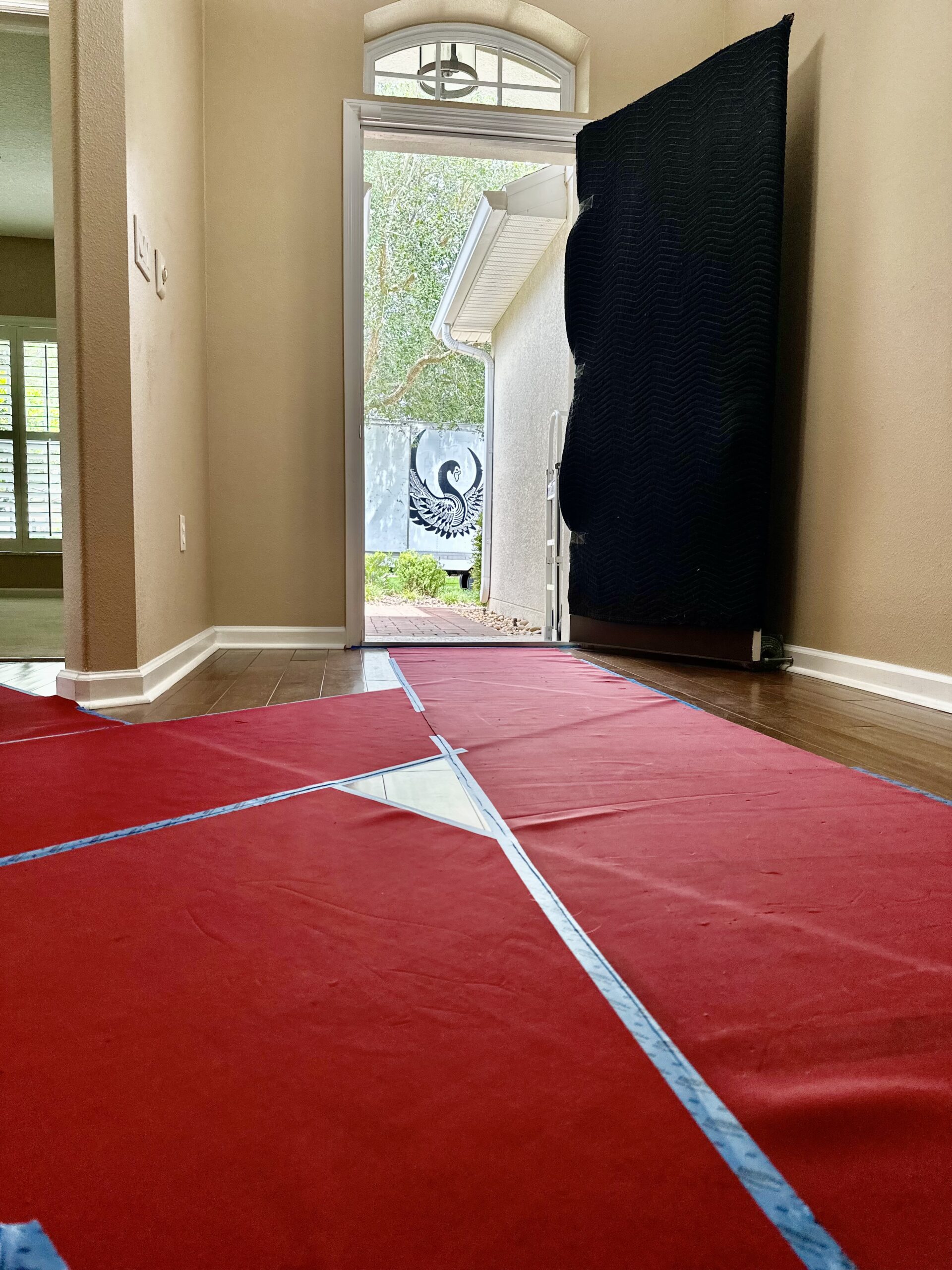
Floor and doorway protection prepared before a Florida residential move
Save this checklist for moving day. Six important tasks, expanded with practical steps and timing.
Start with a plan

Six details that make moving day easier.

Handle the items that require appointments first. Then work through address changes, protection, and the essentials you will need before the first box is unpacked.

Confirm the people and timing Movers, date, arrival window, property access, and inventory.
Prepare both addresses Utilities, mail, insurance, parking, gates, and elevators.
Keep important items with you Documents, medication, valuables, chargers, clothes, and water.
01

Book and confirm your movers.

Reserve your moving date as early as practical, especially for weekends, month-end dates, summer moves, and long-distance relocations. A useful estimate depends on more than the number of bedrooms, so provide complete information upfront.

Share the full inventory Include garages, patios, storage units, oversized furniture, safes, artwork, and fragile items.
Explain the access Identify stairs, elevators, gates, long carries, loading zones, and parking limitations at both locations.
Confirm the services Decide whether you need moving only, packing, unpacking, labor, or temporary storage.
Review the final details Verify the date, arrival window, addresses, contact numbers, and payment expectations before moving day.
02

Schedule utilities and home services.

Avoid arriving at a home without electricity, water, internet, or air conditioning. Schedule activation at the new address before scheduling disconnection at the old one, allowing some overlap when possible.

Electricity and water Confirm the activation date and ask whether identification, deposits, or an in-person appointment are required.
Internet and security Book installation appointments early and keep modems, routers, remotes, and security equipment together.
Trash and recycling Check collection days, container requirements, and rules for disposing of boxes or bulky items.
Community access Arrange gate credentials, parking permits, elevator reservations, and association approvals before arrival.
03

Update your address.

Forwarding your mail is only one step. Build a list of organizations that use your address for billing, identification, coverage, deliveries, and official notices.

Mail and identification Update USPS forwarding and review the requirements for your driver license, vehicle registration, and voter registration.
Financial accounts Notify banks, credit cards, lenders, payroll, retirement accounts, and tax professionals.
Healthcare and insurance Update physicians, pharmacies, health coverage, homeowners or renters insurance, and auto insurance.
Everyday accounts Change subscriptions, delivery services, schools, pet records, memberships, and online shopping addresses.
04

Confirm your insurance coverage.

Speak with your insurance provider before the move. Coverage can vary by policy, property, location, and cause of loss, so confirm what applies rather than assuming the old policy automatically protects the new home.

Start and end dates Coordinate coverage so neither address is unintentionally left uninsured during the transition.
Wind and flood questions Ask specifically about windstorm and flood protection; these may be handled differently from standard property coverage.
Moving coverage Review the mover’s valuation options and ask your insurer whether your own policy covers belongings in transit.
Document valuable items Photograph higher-value belongings and keep receipts, appraisals, and serial numbers in a secure place.
05

Pack an essentials box.

Your essentials should travel with you rather than disappearing into the moving truck. Pack enough for the first night and the following morning, then label the container clearly.

Personal necessities Medication, toiletries, a change of clothes, towels, bedding, glasses, and basic first aid.
Important documents Identification, leases or closing documents, insurance information, mover paperwork, and keys.
Devices and power Phones, chargers, a power bank, laptops, remotes, and any equipment needed immediately.
Children and pets Food, water, medications, comfort items, leashes, carriers, and supplies for a safe transition.
06

Prepare for Florida weather.

Heat and sudden rain can change the pace of a move. Check the forecast, keep weather supplies accessible, and make sure both homes have safe, clear walking paths.

Heat preparation Keep cold water available, dress in breathable clothing, and avoid packing hydration supplies in the truck.
Rain preparation Keep towels, rain gear, plastic protection, and dry footwear accessible instead of sealed inside boxes.
Protect the property Use floor runners where appropriate and keep entrances clear to reduce tracked-in water and slipping risks.
Monitor severe weather Stay alert to official advisories and discuss timing changes if conditions could make the move unsafe.
When to do what

A simple moving timeline.

Four or more weeks out

Build the plan

Request estimates, choose your mover, reduce clutter, identify special items, and start utility arrangements.

Two to three weeks out

Handle the details

Update addresses, confirm insurance, reserve building access, and begin packing nonessential rooms.

The final week

Confirm everything

Review the moving plan, finish packing, prepare appliances, monitor weather, and separate essentials.

Moving day

Keep access clear

Secure children and pets, protect personal essentials, walk through the plan, and complete a final check.

Florida-ready moving

Preparation protects more than your schedule.

Good planning helps protect your belongings, your property, and the people involved in the move. Tell your moving company about unusual access, fragile items, weather concerns, or changes in timing as soon as possible.
Insurance policies and moving coverage vary. Confirm coverage directly with your insurer and review your mover’s written terms before moving day.
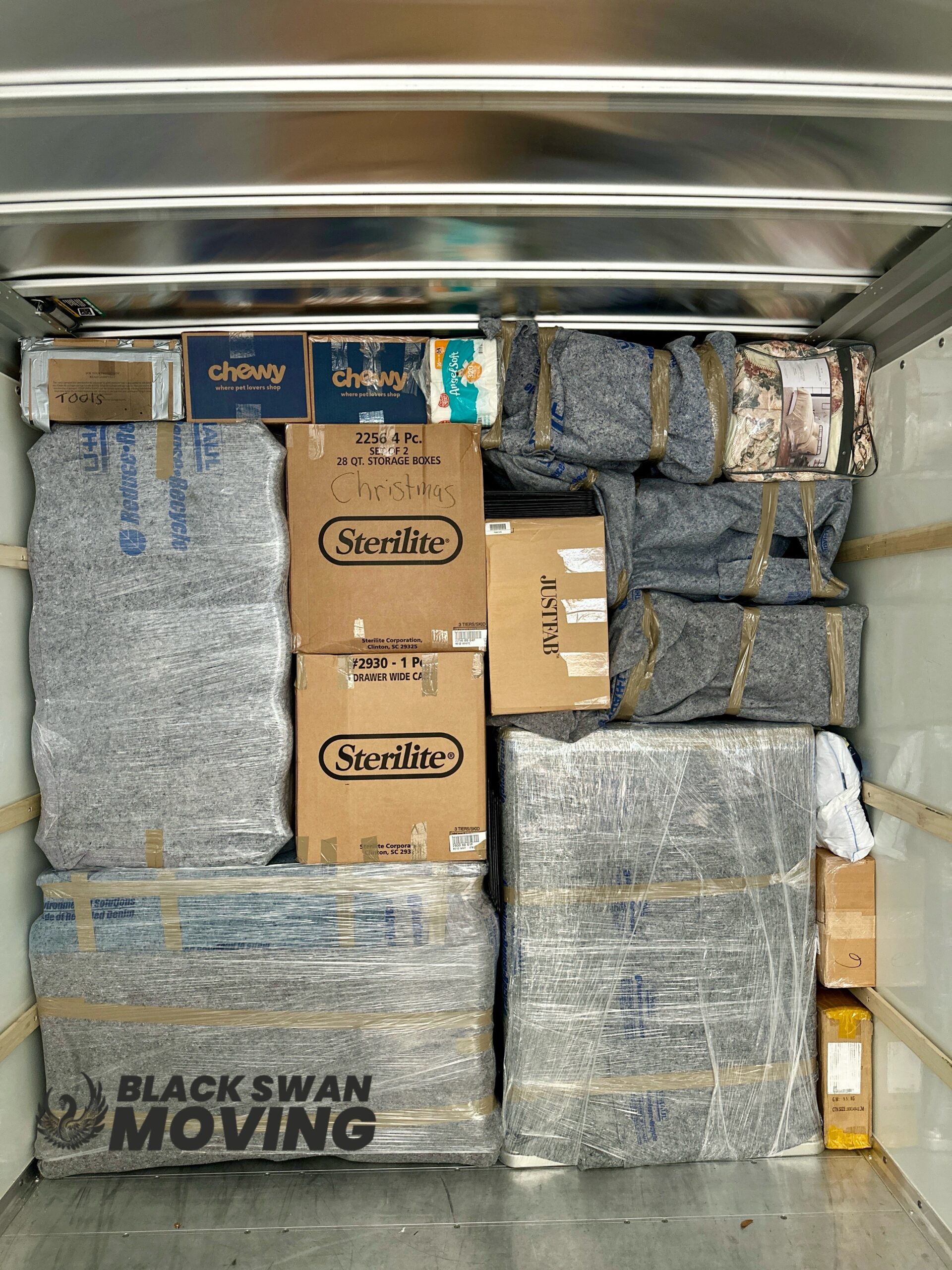
Carefully wrapped furniture and boxes organized inside a Black Swan Moving truck
Moving checklist questions

Before moving day.

Quick answers to common questions from Florida customers.

How early should I book movers in Florida?

Book as early as practical once your date is firm. Weekends, month-end dates, summer periods, and long-distance moves may have less availability. Providing complete details early also helps produce a more useful estimate.

What should not go inside the moving truck?

Keep medication, identification, important documents, keys, valuables, devices, chargers, and first-night essentials with you. Ask your moving company for its list of prohibited or restricted items before packing.

What should I do if rain is forecast?

Keep towels, rain gear, floor protection, and dry footwear accessible. Clear covered paths where possible and communicate with the mover if severe conditions could affect safe loading or transportation.

Should I transfer utilities before moving?

Schedule service at the new address before arrival and confirm activation dates. When possible, allow a short overlap before disconnecting services at the former home.

Can Black Swan Moving help with packing?

Yes. Black Swan Moving offers full and partial packing services. Mention the rooms, fragile items, and materials involved when requesting your moving quote.